  1. Blog
  2. Article

Alexia Emmanoulopoulou
23 September 2015

Infographic: LXD Machine containers from Ubuntu


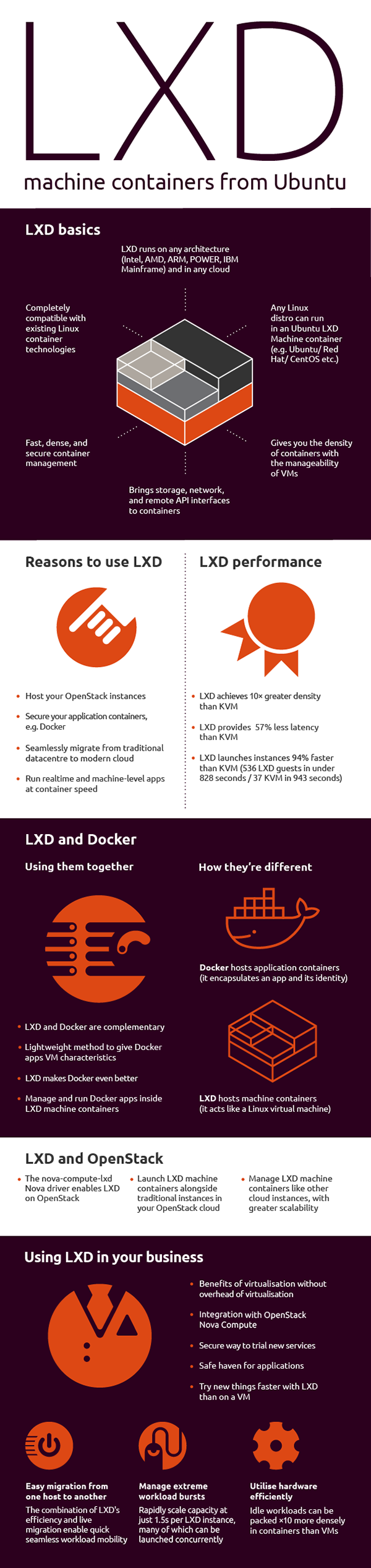
LXD (pronounced “lex-dee”) is a container hypervisor from Ubuntu. LXD containers look and act like virtual machines, but have the lightweight performance and scalability of process containers. You can use LXD on its own to deploy traditional workload applications, or you can use Docker containers inside LXD containers to get the best of both technologies.

The infographic below introduces the basic facts about LXD, provides figures on LXD performance, explains how LXD and Docker work together and offers applications of LXD in your business.
 

Download datasheet      OR     Install LXD using the command line tool ›


Related posts

MicroCloud and LXD LTS releases now available

Canonical announces the latest Long Term Supported (LTS) releases for MicroCloud and LXD

Native Dell PowerStore integration lands in Canonical LXD

Canonical has broadened enterprise storage options for LXD by introducing a native driver for Dell PowerStore.

Ubuntu Server: a platform made for enterprise scale

A platform is an environment that allows software to run smoothly across the infrastructure, runtime, and application layers. The key word there is “smoothly”: a good platform...

Canonical partners with Snyk for scanning chiseled Ubuntu containers

Canonical, the publisher of Ubuntu, is pleased to announce a new partnership with developer-focused cybersecurity company Snyk. Snyk Container, Snyk’s container security...